Tuesday, November 7, 2017

How do astronauts wash their hair in ant-gravity space?

You probably know that astronauts in space float due to the lack of gravity.  Have you ever wondered what that means for their every day activities?
...EVERYTHING FLOATS...
How do they eat, how do they drink, how do they wash their hair?
This video will show you how one astronaut keeps her long hair clean during her space travels.
You can read more about Karen Nyberg here!

Wednesday, November 1, 2017

Science Fact of the Week (11/1/17)

Have you ever heard of the precipitation called HAIL?

Hail forms in a complex dance between moisture and wind. Deep within cumulonimbus clouds ice crystals form and begin to fall towards the Earth’s surface. As this happens, wind gusts pick up the ice crystals, pushing them back up high into the clouds. As they begin to again fall down, they continue growing in size. Again, a wind gust might catch the growing hail stones, pushing them back up high into the clouds. This process may be repeated several more times until the hail stones become so large that they are too heavy for the wind to carry, causing them to fall towards the Earth. If you count the layers of ice, you can figure out how old it is – or how many times it cycled through the clouds! Just like counting the rings on a tree.

Monday, October 30, 2017

V-O's Very Own WEATHER STATION!

weatherbug.com
Did you know that V-O has its own Weather Station?
That's right!  Just like the observatory at the Blue Hills, V-O collects weather data and uses it to help meteorologists in our are make forecasts.

You can access all the data by clicking HERE! Can you use this information to predict the weather for tomorrow or explain the weather we're having RIGHT NOW? I bet you could if you tried.

Wednesday, October 25, 2017

Science Fact of the Week (10/25/17)

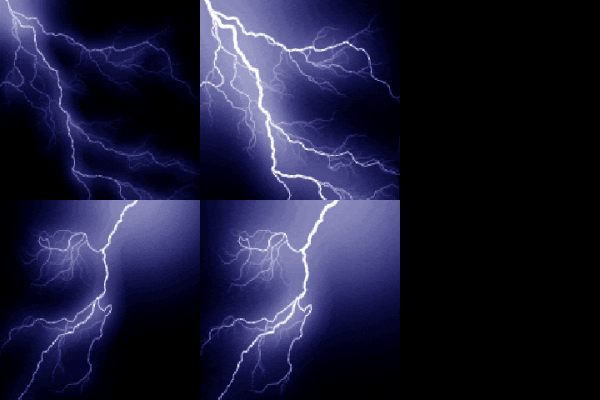
Did you know the Earth experiences millions of lightning storms every year?
https://media.giphy.com/media/Ro7WN1HudOgJq/giphy.gif

These lightning strikes are incredible discharges of electricity from the atmosphere that can reach temperatures close to 54,000 °F (30,000 °C).
Lightning heats and expands the air so around the bolt so intensely, that the air begins to jiggle. When the jiggling air reaches our ears, we hear Thunder!
Because light waves travel faster than sound waves, we will always see lightning before we hear its thunder.

Wednesday, October 18, 2017

Science Fact of the Week (10/18/17)

Did you know that the earth is covered in an invisible bubble called the atmosphere? It’s the reason we’re able to live on earth because it has breathable oxygen!
There are 5 layers, but the most important layer is the one closest to the ground called the TROPOSPHERE. Almost all weather happens in this first layer!
You can remember the layers by saying:
https://d2gne97vdumgn3.cloudfront.net/api/file/eZbbphRRTqMqovWzjYFZ
Tomato Soup Makes Tongues Excited.
Troposphere
Stratosphere
Mesosphere
Thermosphere
Exosphere

Wednesday, October 11, 2017

Science Fact of the Week (10/11/17)

Did you know that there are many science instruments to measure the different elements of weather?


https://globalefficientenergy.com/wp-content/uploads/2014/06/Indoor-Humidity-Level.jpg
https://is3-ssl.mzstatic.com/image/thumb/Purple127/v4/8c/33/c1/8c33c1c8-dfae-7768-5b36-9e353dce8cf6/source/512x512bb.jpg
A hygrometer measures the amount of moisture in the air – or humidity.


A barometer measures air pressure. High pressure means GOOD weather, and low pressure usually brings poor weather.


An Anemometer measures wind speed with spinning cups!
Anemometer:http://guideimg.alibaba.com/images/shop/2015/08/06/86/american-educational-corrosion-resistant-cup-anemometer-with-revolving-wind-cups_7284986.jpeg


Do you know the instrument that measures temperature?
https://www.acurite.com/media/catalog/product/cache/1/thumbnail/600x/17f82f742ffe127f42dca9de82fb58b1/0/0/00322w-800x800_2.jpg

If you guessed thermometer, you are correct!

Wednesday, October 4, 2017

Science Fact of the Week (10/4/17)

Have you noticed that red fall colors seem brighter in some years than in other years?
The temperature and cloud cover can make a big difference in a tree's red colors from year to year.
In the daytime, the leaves can produce lots of sugar, but the cool night temperatures prevent the sugar sap from flowing through the leaf veins and down into the branches and trunk. Researchers have found out that the red pigment in leaves is produced as a form of protection. It allows the plant to recover nutrients in the leaves before they fall off. This helps make sure that the tree will be ready for the next growing season.
So, when there are a number of warm, sunny autumn days and cool but not freezing nights in a row, it's going to be a good year for reds.
https://imboston.com